0757-83838851
info@hilongbattery.com
0757-83838851
info@hilongbattery.com


| Model no.: | 18650 2600mAh |
| Nominal Votage: | 7.4V |
| Weight: | 110g |
| Capacity: | 2600mAh |
| Rate Energy: | 19.24Wh |
| Chemistry: | LiNixCoyMnzO₂ |
| Hazardous substances: | No |
| Manufacturer: | Hilong Battery Technology Co.,Ltd. |
| Postal Address: | No.4 Xingye 3rd Rd Guanglong Industrial Area Chencun Town, Shunde District, Foshan Guangdong China |
| Place of manufacture: | China |
| Website: | www.hilongbattery.com |
| Production Date(PD): |
See battery |
Information on prevention and management of waste batteries 针对废旧电池的预防和管理的信息说明
Information on the role of end-users in contributing to waste prevention
Follow up the charge method and storage method according to specification of product/battery. Avoid crush, impact, shock, etc. to the product/battery.
Information on the role of end-users in contributing to the separate collection of waste batteries
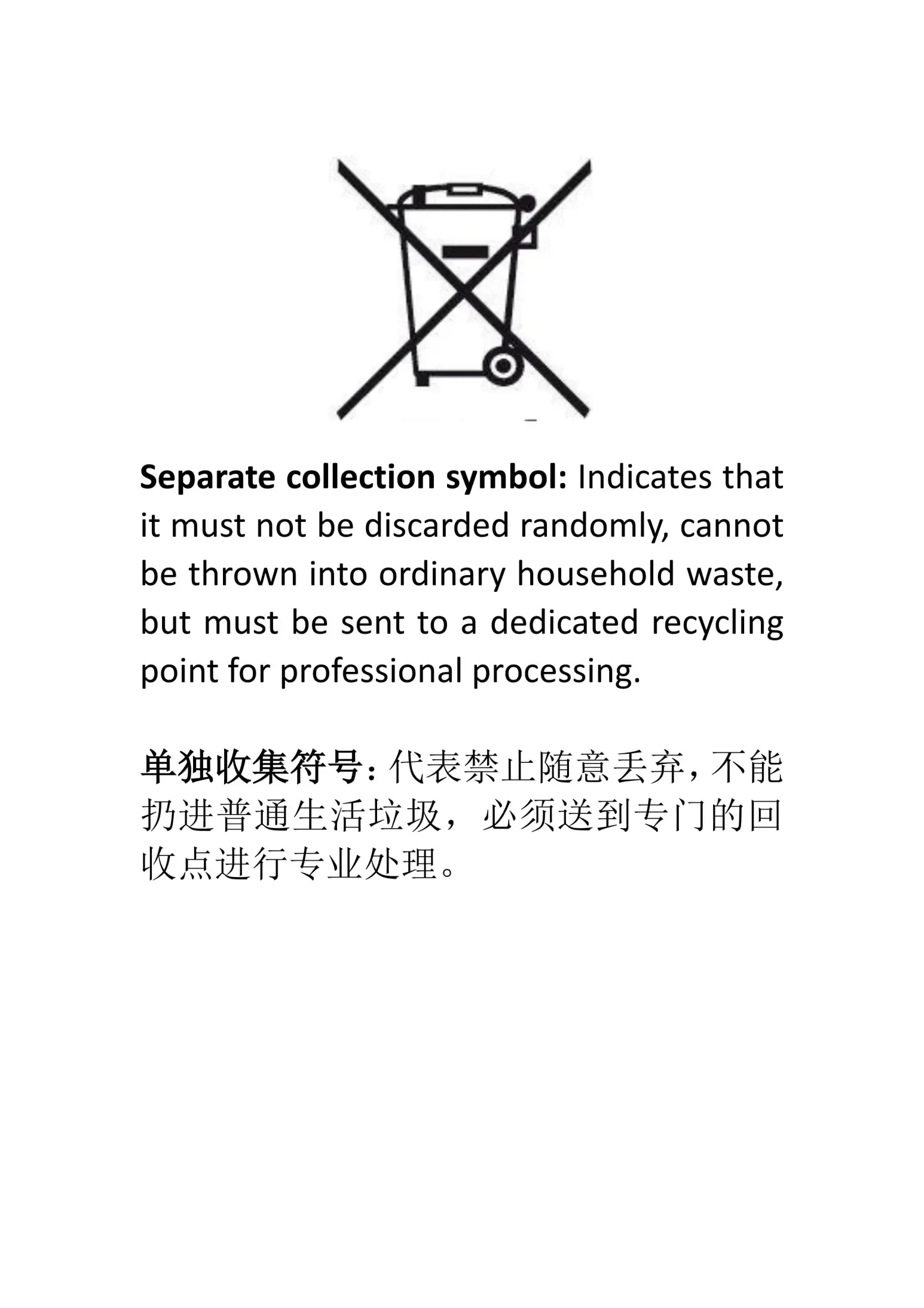
It is prohibited to discard randomly. Do not throw it into regular household garbage. It must be sent to a dedicated recycling point for professional processing.
The separate collection, take-back and collection point, preparation for re-use, preparation for repurposing and treatment available for waste batteries
Separate collection-mandatory; must not go into mixed household waste.
Take back&collection points-free, provided by producers at retail stores and municipal drop-offs.
Preparation for reuse-generally not applied. Preparation for repurposing-not applied treatment-mainly recycling: sorting, shredding, and recovering metals(Li, Co, Ni, etc) via pyrometallurgy/hydrometallurgy; residual waste is safety landfilled/incinerated.
Safety instructions to handle waste batteries
Handling: Wear gloves and goggles. Do not puncture, crush, deform, or expose to heat or fire.Packaging: Tape terminals to prevent short circuits. Use rigid, leak‑proof, non‑conductive containers and secure batteries upright. Label clearly with "Waste Batteries" and indicate lithium content.Storage: Keep in a cool, dry, ventilated place away from sunlight, combustibles, and water. Segregate different battery chemistries.Transportation: Follow applicable regulations (e.g., ADR, IMDG, IATA). Use correct UN numbers and attach shipping documents with emergency information.
Recycle or dispose of in accordance with government, state & local regulations.
Regarding the impact of harmful substances present in batteries on the environment, human health, or personal safety
Used batteries contain toxic heavy metals—including cadmium, lead, mercury, nickel, zinc, and manganese. Cadmium, lead, and mercury harm the nervous system and
damage the liver and kidneys. Nickel and zinc can pollute soil and water and disrupt ecosystems when released in excess. Never discard used batteries in regular trash. Return them to authorized recycling centers for safe, professional handling.
Meaning of labels and symbols 标签和符号的含义
EU declaration of conformity 符合性声明